Monday, February 29, 2016

BE POSITIVE / SER O POSITIVO

PHARMACY STAFF

Ser O Positivo


Here in Mozambique HIV/AIDS has been an epidemic since the 1980’s; today it affects 11.5% of the population and is #5 in the world’s country comparison dealing with this disease. In my province the rates are higher because of the proximity to South Africa. In Magude,there are a substantial number of male migrant workers and estimates are higher - approx. 14%. 

Since the late 1990 treatments have been found to manage the disease through a daily medicine called anti-retroviral drugs (ARV).  These drugs are used to treat HIV by restoring the immune system and delay the progression to AIDS. ARV became available here through donations since 2007.

WAITING FOR PRESCRIPTIONS
People here walk or travel miles to refill their medicine every month, imagine the size of Connecticut and spread three hospitals around the state – that sums up the distance between the person and the hospitals that have the ARV medicines. 

NEVER ENDING PAPERWORK
A new project was introduced to alleviate this issue and reduce the abandonment of treatment. It’s called GAAC (Support Group Community Adherence), people who are live close team up and take turns coming to pick up the whole groups prescriptions. It is community at its finest.
Even with resources available HIV patients still have barriers. At the pharmacy, there is a box of files of people who have abandoned treatment and are sought after by buscas (go-get) to educate and support them to stay on treatment. 90% of time they can’t be found, have passed away, or feel ill on the ARV and choose to stay off.  I have yet gone on the searches, but I’m planning to build a team of strong leaders who will act as life recruiters and build a support network to help those who have abandoned hope.
The percentage of woman carriers are higher then men, due to non-traditional customs (many wives), yet the percentage of babies born with HIV have declined drastically because of pre-natal testing and treatment of the mothers.
It is the biggest health issue here in Mozambique, yet it still carries the stigmas. When I was doing the Community Needs Assessment, one question asked was, “What is the community’s attitude on HIV?” Results:
Accepted             48%
Shame                  16%
Judgmental        19%
Ignorance            11%
Discrimination   6%

Watch this clip “Ser O Positivo”, and be positive with me on the elimination of this disease. (Go to Utube).


Thursday, February 25, 2016

Wicked Mother Nature

Wicked Mother Nature

Here in the sub-tropics Mother Nature is the downside of being a volunteer in Mozambique.  The people are wonderful, the work is interesting, the infrastructure is an experience, but the weather in the south is miserable. My villa, Magude, is ending the season in a drought for the second year.

First the heat is a bit extreme; the past month has a daily average of 100 f /39.5 c temperature. Inside the homes are like ovens because of the inexpensive tin roofs, so sitting outside in the shade is a practical option.  The fan is a traitor; it just blows the hot air. Because people here are accustomed to it they don’t complain until they enter into a conversation with me, then they giggle and agree that this heat is a killer.

The heat will not kill but the drought will.

The clouds build up, spit, and then pass; or it drizzles for an hour and just clears the dusty air.  At this point in the season 2015-2016 ends as another dry rainy season.  The chance of the yearly crop production is null - the soil is like sand; and there has been a large loss of chickens, goats, and cattle.

Produce has also declined and skyrocketed in price. Yesterday at the market seeing the sizes and prices of cucumbers and tomatoes, I think local farmers are buying and reselling imports from South Africa to make up for the loss of income.


The river that crosses Magude is called Incomate, and it is the supply of water for the villa. The majority of people are without water facilities in the homes, so the river is used for bathing, supplying drinking and cooking water, washing clothes, and a social venue for the cows (they drink and bathe there as well). Hygiene another issue. 


Here are pictures of the river today.


Being an agriculturally based economy without water is a dilemma. Being a human being who needs to eat from the family farm that has not produced is devastating.  I have already noted the diminishing weight gain among young children. 

Just today after a scorching dry weekend the sick line in the pediatric unit was longer than the monthly check ups line.


Rain, rain, don’t go away. We have been waiting every day. Little Suzy needs to eat; it won’t happen in dry heat.


Saturday, February 13, 2016

My new normal.

Blending in and making new friends

My new normal

Nine months have passed since disembarking from the 747, for the most part I’m feeling settled into my new community and my days are no longer clouded with confusion.
Here are some of my new normals:

Secret friend party
·        

      STRUCTURE:   I no longer have a daily planner, and neither does anyone else. Things get done and it’s never too late, you might have to wait, but it will happen. Days are from sunrise to sunset and a week has 6 days, 1 is put aside to relax. This is a very big change for me, at home my daily planner was sacred , and Sunday’s took the overflow from the week before. Lack of water and electricity:  This is now so normal that I don’t grimace when the fan stops, well okay, I don’t grimace as long as I did before. Now I just go sit outside with my family, who also complains about the heat.  The shortage of water has a time schedule: 8:00 am – 4:00 there is no water, so I plan storage and flushing the toilet before or after work.  It works.

·         PRACTICALITY:  Drying off with a cotton cloth rather than a towel after a shower is normal. Some days have been so hot that bucket baths are frequently taken, a towel would stay damp all afternoon but the cloth dries quickly.  Feeling the sweat ripple down your forehead is also my new normal.

·         
     REALITY:  I am now able to control my gasps and winces when I am in the hospital’s infirmary. No longer do I tear when seeing a person’s skeletal frame lying there on the hospital bed, or a small child’s eye swollen shut from an infection of who knows what.  Diarrhea, undernourishment, AIDS, and even dermatitis are the foes to a happy life here. A smile, a light touch, and a plea to God are in my new normal.  


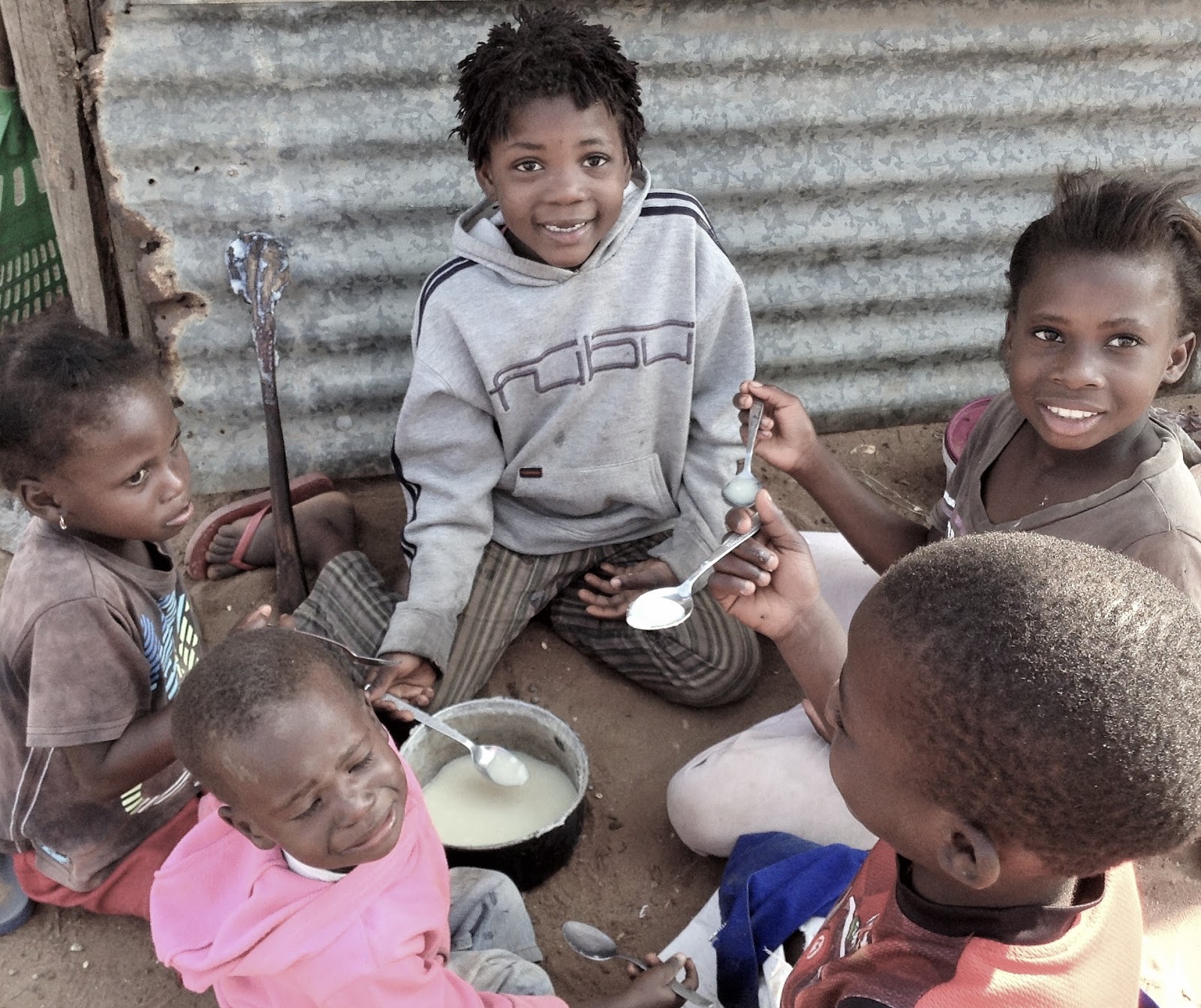
These changes in my normal routine have a double edged sword; it comes with the adventure but it does take adjustment.  Sometimes I sit back and wonder if it’s worth it,  then looking at these children's faces I no longer doubt my stay.


#BloggingAbroad

Monday, February 8, 2016

Politics: Air in Moz is smoldering.

Day of the Heroes

February 3rd is a national holiday here in Mozambique; it is the Day of the Heroes. Citizens are expressing their patriotism with ceremonies similar to our Memorial Day and Veterans Days. In Mozambique, a relatively new country, the memories of fighting are fresh.  
For sixteen years the country was ravaged in a civil war between the political party FRELIMO and a rebel group called RENAMO, which ended 1992. Just last month, 24 years after the peace agreement, Mozambique was finally declared landmine free, yet the political conflict remains.
The country remains precarious politically even in 2016.  The rebel group leader of RENAMO (who remains as the head of the now political party since its inception 40 years ago) has vowed to seize control of six Northern provinces through legitimate electoral votes and is claiming electoral fraud in the 2014 election. Warnings to control these areas have been made, but the party might not have the strength within its number of leaders.
The low-level violence between the two political parties remains; last month the RENAMO secretary general was shot and his bodyguard killed. Citizens are fleeing areas, claiming that the government forces are burning down homes in search of the opposition. There remains a division between RENAMO’s north and central with FRELIMO’s south, claims of income-inequality despite the money coming into the country from exporting natural resources (found in the north).  
There are eyes on this smoldering heat, Peace Corps Security remains abreast of the situation for the safety of volunteers in those regions.
The land-mines buried in the soil were cleared but those evolving from the voter’s booth remains.

Mozambique, our Glorious Land
Rock by rock constructing the new day
Millions of arms in one only force
O Loved fatherland we will be successful
United people from Rovuma to Maputo
It harvests the fruits of the combat for the Peace
The dream grows waving in the flag
And goes cultivating in the certainty of tomorrow


-          Mozambique National  Anthem , chorus 


“#BloggingAbroad”


Thursday, February 4, 2016

What a Crazy Day!

What a Crazy Day!    Idiom:like crazy Informal To an exceeding degree: 

I’ve been in Mozambique for nine months and I must say my days have been full of experiences.  That is the phenomenon of acclimating to a different cultural.  An interesting day is one thing, but a crazy day is another;  together with my co-workers we all  were just shaking our heads.  

It started off as very typical monthly visits to the rural hospitals to bring supplies, checking-in with staff, and review files.  I haven’t been to these areas yet so I jumped on the truck, thrilled to get to the outskirts of my small villa and to see the hospitals in the more rural areas. My villa is capital of the district and has the “Health Center” with approximately 30 staff serving 40,000.  There are 5 more clinics spread out within the district serving 21,000 with primary care, each having no more than 3 technicians. It is hard to explain what it was like to go from the main hospital were the resources are very limited  to the clinic were the only resource available are the medicines  carried in six boxes.

So we all are packed into this pick-up truck with medical supplies for about 45 minutes with one bottle of water, a dozen rolls, and a small bag of fried fish cakes. Joking, laughing all snuggled together and then it starts…the craziness of the day.

2 FLAT TIRES – front left and back right.
Of course there was just one spare, so we had to wait to get the tire picked up, brought back to be fixed in the villa, and then returned.   
Our spirits remained fine for the first few hours, but after 5 hours it plummeted; the heat, thirst, and hunger all rolled into one crazy afternoon.   


                                   Great the tire is on! What, the truck won’t start? This is crazy!


“There has to be something around here?”

In conclusion I think the day was crazy!  On the other hand, my co-workers  accustomed to situations like that,  are thinking that I am crazy! What?……………I just needed to take a picture.


http://bloggingabroad.org/blog-challenge


Sunday, January 31, 2016

Details: The points we trip over in life’s journey.


Details: The points we trip over in life’s journey. 

I wish I read a how-to book called “Live in harmony and pay attention to the details” because if I did, these last nine months would have been a smoother ride. That’s where the value of knowing the details comes in; unfortunately they are learned at the most inopportune time.
Here are two little details In Mozambique’s cultural that I wish I was aware of:

Undergarments are to be washed by the owner after you bathe and hung where no one can see them. If they are in public view they will be removed from the clothe line to some remote location. You will go without, until you need fresh lemons and go to pick one from the tree near the clothe line. (Undergarments are private items).

You can make a schedule; just do not put a time or date- numbers don’t work here.  It will happen when it happens, just keep it on your list. The city dentist will understand why it took you six hours to come to his office since the bus took 2 ½ hours to fill on a Wednesday. (Buses do not depart until they are filled to capacity).


Details of a harmonious life…..well at least I'm dancing to an new  rhyme .


With underwear on, so what if I trip?

 http://bloggingabroad.org/blog-challenge

Saturday, January 23, 2016

What does a dollar buy you in Mozambique?


What does a dollar buy you in Mozambique?


I gasped when I read the prompt from blogging abroad challenge on the topic for this week’s post; it is money. Money is a touchy topic, isn’t it? I am going to assume that 9 out of 10 of my readers are nodding yes. We all could use a bit more money to complete something or to purchase some wanted item. Now I am one that doesn’t think the world revolves around money, I think that our cultures often distort the value of money, and mine (American) is guilty of valuing tangible materials too high. The American culture has this wacky ambition to make as much money as possible, often our lives are unbalanced and those things need to balance it out can’t be purchased – like time. 

Sorry I got off the topic.That is there.  Here in Mozambique people are rich with time but need more money just for the basics.

What can you buy here for one dollar? Nothing.  The ladies at the market don’t take dollars.  They work for meticais. Okay so I will convert the costs from meticais to dollars and you will be surprised how inexpensive items are.  Let’s do food, a simple basic necessity that everyone can relate to.
Dust off your micro-economic books and remember the simple supply and demand theory; the price of the good is balanced with how many items there are and how many people want to buy it. Now, I live in an agricultural area and homes have enough land to grow produce to sell it at the market – supply is high; costs are relatively low.

COMMMON FOOD ITEMS
US $
 3 mangos
 $       0.25
 1/2 dz rolls
 $       0.75
 1/2 dozen eggs
 $       1.00
 can of tuna
 $       1.00
 box of spaghetti
 $       0.50
 1 lb plum tomatoes
 $       0.25
 1 lb onions
 $       0.25
 bunch of green herbs
 $       0.25
 2 red apples imported
 $       1.00
 1 avocado
 $       0.10
 4 romaine lettuce  heads
 $       0.25
 1 lb of brown sugar
 $       0.85
 1 lb of sweet potatoes
 $       0.50


Pretty inexpensive, right? Now that you have an idea of the cost converted into dollars, but people don’t make dollars here.  Therefore, it is inequitable information, unless you were eating in Mozambique.  Let’s see how much it costs my co-worker:
·         Employee of the Federal Health Care System
·         Equivalent to having an associate’s degree in nursing (LPN)
·         His income is $1,990 per year – 3x more than the gross  national statistics ($660)
·         His weekly income is approx. $45

    DIET OF ONE DAY EST.

 3 fruits
 $        0.25
 bread roll
 $        0.05
 3 eggs
 $        0.25
 Chicken & rice dinner
 $        2.00
 day total
 $        2.55
 av. week
 $      17.85
 wks income
$       45.00
 % of income just on food
            40%

In this simple scenario comparing the cost of living with this higher-income is alarming.

It is difficult for me to fathom how the unemployed / under-educated families survive. I see the results of low-literacy and malnutrition every day. Intuition tells me with continued training, influence, and foreign investments this generation of children will yield the results that we are all striving for. 

Let's hope I'm right.  http://bloggingabroad.org/blog-challenge